The Palm tree needs large amounts of macro and micronutrients for good growth and economic production. Therefore, fertilizer application is an important process that increases the production of dates and improves the quality of fruits. The amount of fertilizer required for a Palm tree depends on the type of soil, the types of intercrops grown under it as well as the type and age of the tree. Let’s check out the best fertilizer for Date Palms.
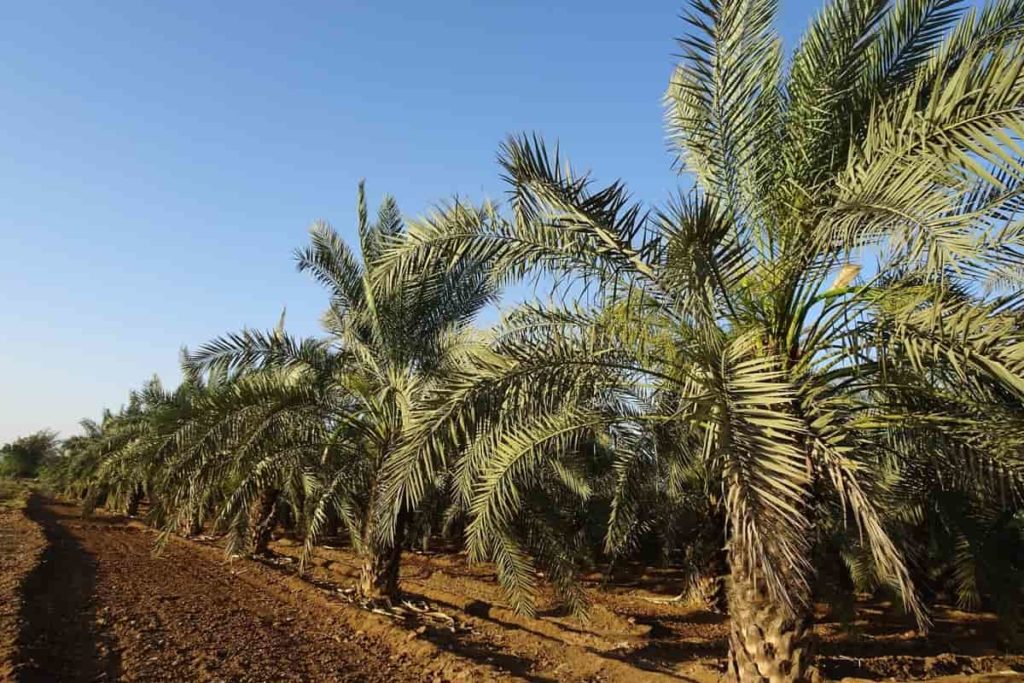
Fertilize the established plants with special Palm fertilizers four times a year. If the plant does not look healthy, it may be deficient in one or more essential nutrients, or it may have a pest or disease problem. You will need to take good care of the Palm trees after planting Palm trees. Palms need good nutrition and control of pests and diseases in addition to irrigation and support. In Date Palm, manure makes an excellent fertilizer in early spring. In general, the diet of a Palm tree contains the following;
- Nitrogen
- Potassium
- Phosphate
- Iron
- Manganese
- Magnesium
Why do I need to fertilize Palm trees?
Just as people need a healthy diet to function effectively, Palm trees need proper nutrients to thrive. Due to the different types of soil around our world, some soils may be devoid of important nutrients which can make a huge difference in the overall appearance and health of the Palm. Being able to recognize these deficiencies early on cannot only give you an idea of what the plant needs, but can also counteract any long-term damage caused by nutrient deficiencies.
Potassium deficiency is one of the most common problems in Palm trees. This is especially easy to point out as friends will start showing yellow spots on the old flags and eventually start spreading to the new fronds. Some of the other nutrients that dates will need include manganese, iron, and magnesium.
In case you miss this: Date Palm Cultivation In Rajasthan, Planting
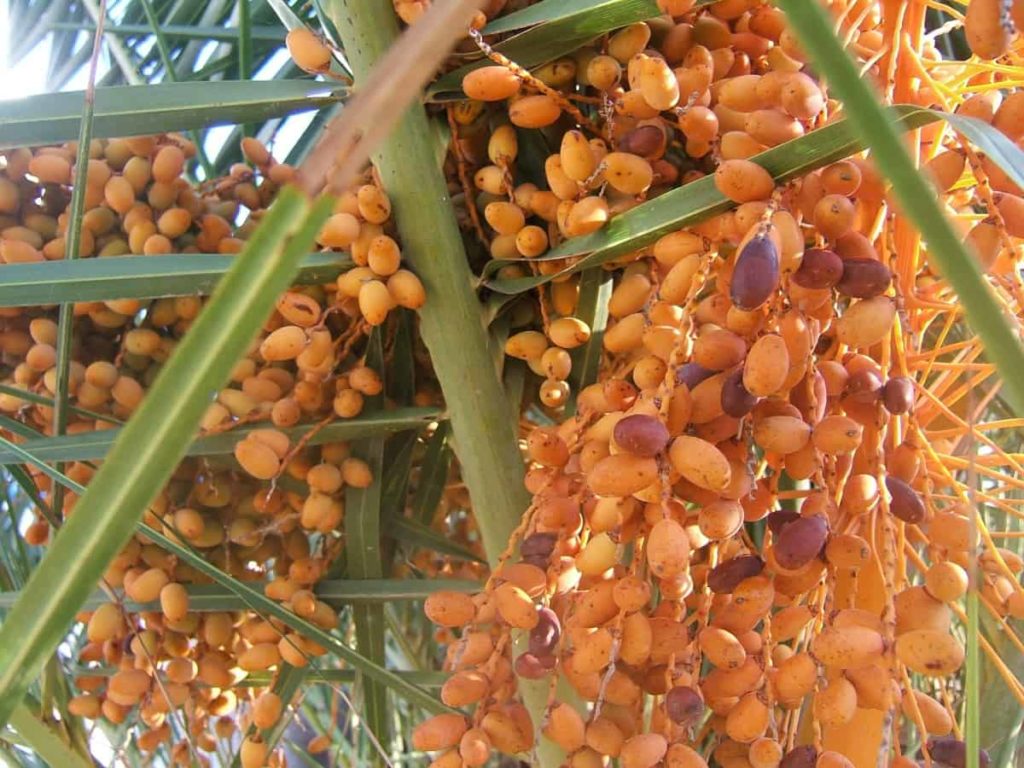
Slow-release versus quick release formula
Not all fertilizers are ideal for fertilizing Palm trees. Not using the right fertilizer formula such as quick release fertilizer, can cause severe damage to the Palm and even death. In the spring and summer months, it is always best to use a slow-release fertilizer once or twice a year to ensure that the Palms continue to receive adequate nutrients during the growing season. In areas where the temperature is mild throughout the year, it will be necessary to fertilize a few times throughout the year as the Date Palm will be growing regularly.
You will also want to choose a fertilizer with a balanced proportion of nutrients. Too much or too little of the essential nutrients can do more harm than good. If you are not sure how much fertilizer to use, it is better to add less fertilizer as more fertilizer can cause more problems.
Best time to fertilize Date Palm
Apply FYM @ 10-15kg is applied to young plants and 30-40kg per tree to adult plants from September to October. 4.4 kg of urea is applied to year old plant to mature. Urea is used in two equal doses; the first dose is given before flowering and the other half is given after fruiting in April.
Compost manure fertilizer
Manure makes an excellent option to fertilize your Date Palm. If you want to use packaged fertilizer, special Palm tree fertilizer is recommended. Fertilize at the end of winter to prepare the tree for fruit production in the coming months. Farmers use mostly manure (20-50 kg per Palm tree every 2 years) to meet the nutritional requirements of the plant and in some cases mineral fertilizers at the rate of 0.5-0.9 kg per Palm tree, especially as ammonium nitrate.
In case you miss this: Organic Dates Farming, And Cultivation Practices
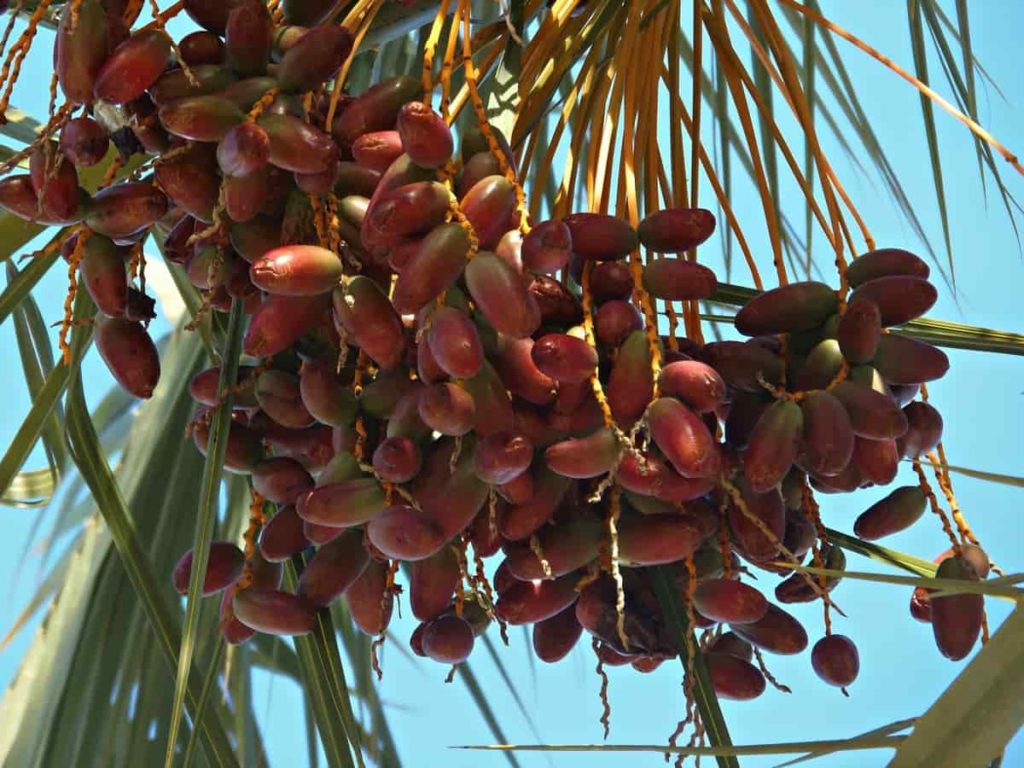
Fertilize application
Apply the fertilizer to the soil at a distance of 6 inches from the drip line up to 1 foot from the base of the Palm. Though, the drip line corresponds to the tips of the outermost fronds. Spray the fertilizer on the soil and use a rake to scratch it up to 1 inch above the soil. To activate the fertilizer, apply 1/2 inch of water in this area and soak it in the soil so that it becomes more available up to the roots of the Palm.
Best fertilizer for Date Palms
When choosing a fertilizer, you may want to choose a slow-release formula designed for Palm and tropical trees. Slow-release Palm fertilizer will provide the best amount of nutrients for many months. Therefore, the tree will get a lot of nitrogen and potassium as well as a small number of other nutrients, such as magnesium, manganese, and iron.
Fertilize Date Palm trees for maximum results
When choosing a Palm tree, one of the most important factors in keeping a tree healthy is the most overlooked. Most people check common items such as zone tolerance, water and lighting requirements, size, and price. While these are important for keeping Palms healthy, many people forget that it is important to fertilize the Palms for best results.
The best NPK fertilizer for Palm trees
Palm trees are large, they need good quality fertilizer that meets all their essential needs. Choose NPK fertilizer with a ratio of 3: 1: 3. N for nitrogen, P for phosphate, and K for potassium when buying fertilizer for your Palm tree. Get a slow-release fertilizer, which slowly releases nutrients, giving the plant plenty of time to absorb them all. In addition, apply fertilizer to moist soil. When the soil is dry, never add fertilizer as it may cause absorption.
Nitrogen
When you buy fertilizer for any plant, including Palm trees, the first feed you see is nitrogen. Nitrogen is important for every plant, making up about 3% to 4% of its composition, which is more than any mineral. Nitrogen is one of the major promoters of plant growth and development. It helps the Palm tree to grow by enabling it to make amino acids. Amino acids are the basic blocks of protein, which are involved in the metabolic and growth activities of plants.
In case you miss this: Date Palm Seed Germination, Time, Temperature (Kajura)
It is an important component of chlorophyll, a compound that plants use to trap sunlight and make suitable sugars through photosynthesis. Without nitrogen, plants cannot synthesize proteins and will eventually die. These proteins are either important structural units of plants or act as enzymes, enabling them to carry out the biochemical processes required for survival. Nitrogen helps Palm trees with ATP (Adenosine Tri-phosphate), a basic energy compound that makes it possible for plants to perform all of their natural cycles.
Phosphate
Phosphate is one of the most important nutrients in Palm trees. It forms an important component of many plant functions like Palm tree growth and reproduction. The plant needs to have an adequate amount of phosphate, which helps it to maintain its normal green color and complete all its normal functions for the healthy growth of the Palm tree.
Potassium
Potassium has different functions in Palm trees. It is essentially involved in the movement of all essential sugars and nutrients through the plant. Potassium is classified as a micronutrient in plants, as they consume large amounts of it throughout their lives. It promotes the movement of water, carbohydrates, and nutrients between all plant cells.
Also, it stimulates the activation of enzymes in the plant, which helps in making starch, protein, and ATP (energy). Furthermore, it accelerates photosynthesis. An ideal supply of potassium is essential as it also regulates the opening and closing of plant stomata, which allows the exchange of oxygen and carbon dioxide gases. For some species of Palm trees, this limits the damage during the winter, when the plant is more prone to dehydration.
Organic fertilizers
If possible, use organic fertilizers such as fish emulsion and worm castings. Also, these feeds are environmentally friendly.
Tips for applying fertilizers to Date Palm trees
- Carefully read and follow the instructions on the product package.
- Apply fertilizer only on moist soil and wash the soil after the application of feed.
- Use slow-release fertilizer.
- After fertilizing, water the area around the plant.
- Choose a fertilizer with a ratio of 3: 1: 3.
- Please make sure that the fertilizer also contains micronutrients like Magnesium, Iron, Manganese, etc. Make sure you know what kind of fertilizer your plant responds well to. Some breeds prefer liquid fertilizers over solid and granular fertilizers.
In case you miss this: Date Palm Tissue Culture -A Beginners Guide
- Fertilize early in the spring. Follow a proper set routine that suits your plant. If the Palm tree is given too much food and too little water, salt can accumulate.
- For large trees, apply the fertilizer at a distance of about 12-18 inches from the trunk and spread evenly out to the tips of the fronds, also known as the “drip line” of the tree.
- Never apply fertilizer directly to the Palm. When purchasing Palm fertilizer, look for an NPK ratio of 3: 1: 3 or similar to ensure proper, balanced nutrients. Always water the soil before and after fertilizing so that the nutrients are absorbed into the root system.
Frequently asked questions about Date Palm fertilizer (FAQ)
Why are the Palm tree leaves turn yellow?
The Palm leaves turn yellow if the tree soil is deficient in essential nutrients like nitrogen, manganese, or magnesium. All of these help the tree to stay green and grow properly. Alternatively, an insect or fungus can cause the leaves of your Palm tree to turn yellow.
Can I use home fertilizer for my Palm tree?
Palm trees need different amounts of different nutrients. Creating such a feed can be reasonably difficult. It may lack some nutrients and may contain some surplus. So, it is more beneficial to get fertilizer prepared especially for Palm trees.
In case you miss this: Dates Farming Project Report, Cost, Profit Guide
Is Epsom salt fertilizer good for Palm trees?
Epsom salt fertilizer is not recommended as it may contain excess potassium. However, if your Palm tree is deficient in potassium, you can use Epsom salt fertilizer.
How often do I fertilize my Palm tree?
Most Palm trees grow abnormally when they are fertilized 3 to 4 times a year. Please read the fertilizer guidelines on the packaging for further guidance.
- Economical Aquaculture: A Guide to Low-Budget Fish Farming
- 15 Common Planting Errors That Can Doom Your Fruit Trees
- How to Make Houseplants Bushy: Effective Tips and Ideas
- Innovative Strategies for Boosting Coconut Pollination and Yield
- Pollination Strategies for Maximum Pumpkin Yield
- The Complete Guide to Chicken Fattening: Strategies for Maximum Growth
- Natural Solutions for Tulip Problems: 100% Effective Remedies for Leaf and Bulb-Related Issues
- Revolutionizing Citrus Preservation: Towards a Healthier, Greener Future
- Natural Solutions for Peony Leaf and Flower Problems: 100% Effective Remedies
- Maximizing Profits with Avocado Contract Farming in India: A Comprehensive Guide
- Natural Solutions for Hydrangea Problems: 100% Effective Remedies for Leaf and Flowers
- The Ultimate Guide to Choosing the Perfect Foliage Friend: Bringing Life Indoors
- From Sunlight to Sustainability: 15 Ways to Use Solar Technology in Agriculture
- The Ultimate Guide to Dong Tao Chicken: Exploring from History to Raising
- The Eco-Friendly Makeover: How to Convert Your Unused Swimming Pool into a Fish Pond
- Mastering the Art of Delaware Chicken Farming: Essentials for Healthy Backyard Flocks
- 20 Best Homemade Fertilizers for Money Plant: DIY Recipes and Application Methods
- How to Craft a Comprehensive Free-Range Chicken Farming Business Plan
- Brighten Your Flock: Raising Easter Egger Chickens for Beauty and Bounty
- How to Optimize Your Poultry Egg Farm Business Plan with These Strategies
- Subsidy for Spirulina Cultivation: How Indian Government Schemes Encouraging Spirulina Farmers
- Ultimate Guide to Raising Dominique Chickens: Breeding, Feeding, Egg-Production, and Care
- Mastering the Art of Raising Jersey Giant Chickens: Care, Feeding, and More
- Ultimate Guide to Raising Legbar Chickens: Breeding, Farming Practices, Diet, Egg-Production
- How to Raise Welsummer Chickens: A Comprehensive Guide for Beginners
- How to Protect Indoor Plants in Winter: A Comprehensive Guide
- Ultimate Guide to Grow Bag Gardening: Tips, Tricks, and Planting Ideas for Urban Gardeners
- Guide to Lotus Cultivation: How to Propagate, Plant, Grow, Care, Cost, and Profit
- Agriculture Drone Subsidy Scheme: Government Kisan Subsidy, License, and How to Apply Online
- Ultimate Guide to Raising Araucana Chickens: Breed Profile, Farming Economics, Diet, and Care
- Bringing Hydroponics to Classroom: Importance, Benefits of Learning for School Students
- Ultimate Guide to Raising Polish Chickens: Breed Profile, Farming Economics, Diet, and Care
- Ultimate Guide to Raising Australorp Chickens: Profile, Farming Economics, Egg Production, Diet, and Care
- Silkie Chicken Farming: Raising Practices, Varieties, Egg Production, Diet, and Care
- Sussex Chicken Farming: Raising Practices, Varieties, Egg Production, Diet and Care
- Homemade Feed Formulations for Livestock: Discover Cost-effective Starter to Finisher Feed Recipes