Organic Vegetable Gardening:
Introduction to Organic Vegetable Gardening: What is Organic Vegetable Gardening? Organic Vegetable Gardening is nothing but growing vegetables without chemical fertilizers and pesticides but with natural ways.
- Vegetables are part of everyone’s daily diet plan and they are the best input for a human body. If you do not need to devote just a little bit more to people organically grown and marketed at the supermarket, maybe you should think about placing your own in the backyard of a home. It’s extremely simple to do that even your children can join in the fun of growing vegetables organically.
- In the case of organic vegetable gardening, people have understood that using pesticides and fertilizers do more damage than good both for health and the environment. Yes, it is going to create the veggies bigger or permit the farmer to crop them quicker but the compounds used in making this occur could be injurious to the health of people who consume them.
- But because the ancient farmers never did this and relied only on irrigation and sunlight, this idea is making a comeback. These can also permit you to them at home because you’ve got access to the three most fundamental things namely soil, irrigation, and sunlight. A few examples of these include cabbage, broccoli, carrots, onions, potatoes, and far more. You simply need to find out which of them may be implanted during the various seasons of the year especially suited for soil type.
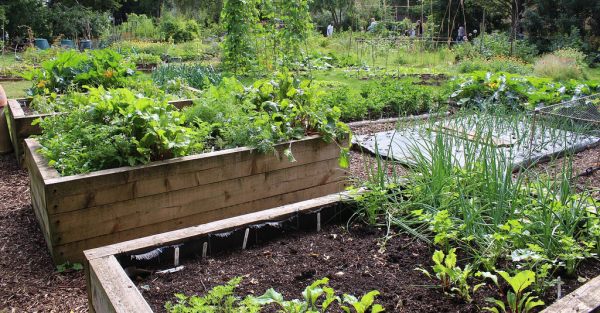
- Appropriate water drainage is very much important for anything growing in the garden. Alternatively, you can use raised beds for growing veggies in your garden for better aeration and drainage.
- Once you have completed your research, you can get the organic vegetable seeds out of the shop. These are typically sold in packets and therefore don’t forget to read the directions and instructions prior to using them.
- Planting the seeds to your natural vegetable gardening is the next stage of the operation.
- Your veggies might be under attack from weeds, insects, and other creatures. To stop this from occurring, you want to receive a bird, even a toad as well as other insects to consume them. For weeds, the one thing that you can do is pull these ones from a single from the floor. As for different creatures, setting up fences and utilizing animal hair, baby powder or deodorant soaps appears to be a great deterrent.
- Mulch is just another alternative. This is sometimes reached from cracked barks, garden mulch, leaf moulds, and compost.
- Some organically grown vegetables may also be carried out inside. Take by way of an instance that tomato which may be grown using a natural container made from clay, wood, or plastic. Just do not neglect to give it some water every day and ensure sunlight so that it could grow.
- You’ll be able to put the containers out throughout the day and when the weather is too cold, bring them inside and place them somewhere else such as in the southern or western windows of your house.
- Another thing you need to keep in mind about growing organic vegetables in these containers isn’t to utilize dirt but instead a combination of peat, perlite, and vermiculite.
Organic Vegetable Gardening Basics:
- We know organic gardening does not use any synthetic products which includes fertilizers and pesticides. However, Nature plays a major role in organic vegetable gardening.
- You must select vegetables suitable for the soil and climate of the region. Buying drought-resistant organic vegetable seeds are preferred in areas where average yearly rainfall is less or experiences drought conditions.
- In order to clear any weeds, rocks, clods, you have to carry the tilling operation before sowing the seeds in the ground or in raised beds.
- For enriching the soil fertility, you should be adding compost, bone meal, or rock phosphate and greensand. This can help the soil by supplying nitrogen, phosphorous, and potassium. You can get soil pH meters to measure the soil pH. As you know different vegetable prefers different soil pH ranges. In case of high pH value, add lime or sulfur to balance it.
- Supplying organic matter is another task of organic vegetable gardening for quality products and higher yields. At least 1 month before planting or sowing, apply leaves, coffee grounds, eggshells, and kitchen waste into the soil.
- At the time of planting seeds, care should be taken so that seeds are spaced by a certain distance without making the roots fight for water. As a weed control measure, plant any other types between vegetable plants.
- Pests are the biggest threat to any organic vegetable gardening. For effective control of these pests, you can use birds, frogs, or other insects which can feed on these pests. you can make a small pond kind so that birds and frogs can station thereby patrolling your organic vegetable garden.
- Placing a few barriers like row covers to prevent moths from landing and laying eggs. Apart from this, use sticky insect/pest traps and foil collars to control pests & borers.
- You can use biofertilizers or organic pesticides like neem oil and other sprays to control these. However, these can only control limited kinds of pests. So based on pest type, buy these to apply in the garden.
- For preventing pests and diseases other than enriching soil fertility, you must follow crop rotation. This is can be carried out after you harvest the vegetables in the garden, so they should be ready for sowing once again. As part of the crop rotation, you have to plant different vegetables in the same space.
- The best part of organic vegetable gardening is that anyone can easily learn basics and implement them in their backyards. These freshly grown vegetables are available 24×7 just a few meters away from your kitchen.
- There are some regions where the government is encouraging people to take up organic farming by providing subsidies and loans. Organic farming can be done even in greenhouse, and Polyhouse.
Organic Vegetable Gardening At Home:
- Now a day’s most people are preferring organic gardening at home especially with vegetables. It’s not a difficult task hence anybody can do organic vegetable gardening at home because the formula or task behind this is not that different from what they do in the regular open field farm. The major and only difference is that you work in a smaller space and you get to select what you like a plant in your home garden.
- The first and foremost thing is finding the best location for your organic vegetable gardening. Most people prefer organic vegetable gardening in their backyards. To be successful with organic vegetable gardening, whatever you are planting should get at least 6 to 7 hours of sunlight every day and should have a good water source.
- Before going for organic vegetable gardening, the soil or the space that you choose must have good drainage for an efficient irrigation system. To make this happen, you can use raised beds for growing vegetables in the garden.
- After deciding the space or location for your organic vegetable gardening, it is time to cultivate the land/soil. For that, you should be ready with the required gardening tools and a pair of gloves to pluck out the weeds on the ground. This might take a couple of days for planting the vegetables in the garden.
- Test the soil with some compost and mixing this with the soil. Should it be able to integrate and stabilize itself with the soil, this means that you can start planting your crops and see them grow in the succeeding weeks.
- If you don’t like to buy compost from the gardening store, you can make your own using coffee grounds, dead leaves, grass clippings, food waste, or even manure. They also serve as excellent fertilizers.
- As for your vegetables, take note that some of these may not be suitable in the land you are planting these on. This is because of several factors that are beyond your control such as the weather, pests, and other plant-borne diseases. You can avoid making this mistake by doing some research on what vegetables are ideal to plant in your area and asking fellow organic gardeners.
- You can protect vegetables in your organic garden by planting different kinds at a time as some of these can protect each other from insect pests.
- In case of an area with wild animals or any predators are common, you should build a secured fence from preventing these.
- You must keep the organic gardening always weed-free by carrying weed removal tasks regularly. However, new weeds grow after some time, so you have to monitor and inspect the ground regularly to check these weed growth.
- Setting up an own organic vegetable garden at your home will surely save you money and protect your health from chemicals. If your backyard has a large space for gardening, you can make some money as well by selling to your neighbors.
Container Organic Vegetable Gardening:
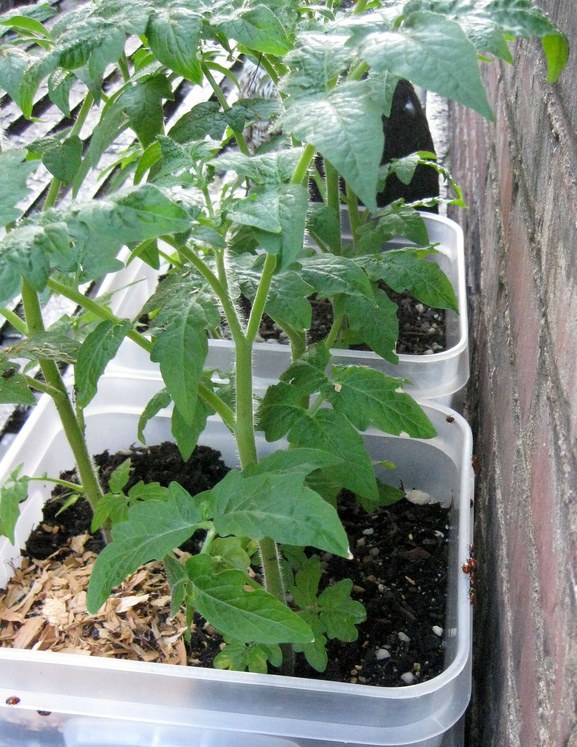
- You can set up Organic Vegetable Gardening not only in backyards but also in Containers.
- Container organic vegetable gardening has advantages. You can change the place of the container whenever needed for getting good sunlight or shade. You can place the containers in patios or balconies or on terraces. If the weather gets too cold outside, you can bring it indoors. But best of all, you don’t have to deal with certain threats that can only happen outdoors like weeds, insects, or soil-borne diseases.
- Container Organic vegetable gardening does not use soil instead use the potting mix. This potting mix provides excellent drainage. Organic compost should be provided in containers for plant growth. Even you can mulch the plants with decomposable materials in containers.
- Avoid too much watering as it may cause plant root rot. We should understand that container plants require less water when compared to backyard plants. However, small amounts of water with frequent intervals should be maintained in container organic vegetable gardening.
- For better aeration and water drainage, you can make some holes under the container. You can hang these containers in your balconies apart from placing them on the ground.
The best suitable vegetables for container vegetable gardening are
- Bush beans,
- Leafy vegetables (Mint, Coriander, Spinach, Lettuce, etc..)
- Any Herbs,
- Capsicum,
- Okra (ladies finger)
- Carrots,
- Eggplant (brinjal),
- Onions,
- Peas,
- Radishes,
- Tomatoes.
Make sure to expose these planted containers to sunlight at least for 6 hours. Usually, the containers used for organic vegetable gardening are made from clay, plastic, or wood. When you buy the containers from the store, select based on the length of the roots and their width.
If you find any aphids in container plants, get the other insects like ladybugs (a pack) to prevent aphids.
The container organic vegetable gardening is the best option for people living in condos and apartments who don’t have backyards.
Organic Vegetable Gardening Tips:
Here some gardening tips for growing vegetables organically.
- First and foremost, decide the types of vegetables to grow in the garden. As you know some kind of vegetables cannot be grown in some regions because of climatic conditions and soil types.
- Select the plants which can adapt well to drought conditions, temperature changes, different soil types, sunlight, and shade.
- Select the organic plant seeds with great disease-resistant power along with providing more yield of vegetables.
- It is better to determine the available space and design your organic vegetable gardening layout so that it would be easy to know how the vegetable is being grown.
- Mulch the vegetable garden so that weeds can be controlled, soil moisture can be protected and mulch material can be turned into organic matter to feed your plants. Mulch materials such as food waste/kitchen waste, dead leaves or grass, and manures can be used.
- In Organic vegetable gardening, it is not required to dig too deep as most of the vegetable plant roots are found 5 to 6 inches from the soil surface.
- Other than compost, add natural fertilizers like neem cake and organic materials in the organic vegetable garden. These can even encourage native earthworms which are best for organic compost making and increasing soil fertility.
- To prevent the pests from pests and wild animals, some birds, frogs can be placed in the garden apart from securing the area with a good fence. If you find the plants are infected, use dilute soapy water and then clear water that is very effective to control the affected stems and leaves.
- If you decide to plant vegetables that are already grown in nursery beds, care should be taken when you remove them so you avoid tearing the outside roots. These grown-up plants are mostly available in plastic containers or pots.
- Mix up your organic vegetable gardening with a variety of plants rather than with a single plant type as this can be useful in preventing some insect pests.
- ladybugs, fireflies, green lacewings, praying mantis, spiders and wasps are useful in eating insects. Apart from that, these can pollinate the plants and decompose organic matter in the garden. remove any weeds by hand to keep the garden clean weed-free.
- Avoid planting the same vegetables in the same space, again and again, Ensure you go for crop rotation to make the soil fertile and avoid some diseases and pests. Don’t plant vegetables too deep as this can damage roots and also encourage weeds on the soil surface.
- To be successful in any organic vegetable gardening business, you must have a proper plan with the layout, soil, compost, water, and pest control.
In case if you are interested in this: Hydroponic Nutrient Chart.
- How to Make Houseplants Bushy: Effective Tips and Ideas
- Innovative Strategies for Boosting Coconut Pollination and Yield
- Pollination Strategies for Maximum Pumpkin Yield
- The Complete Guide to Chicken Fattening: Strategies for Maximum Growth
- Natural Solutions for Tulip Problems: 100% Effective Remedies for Leaf and Bulb-Related Issues
- Revolutionizing Citrus Preservation: Towards a Healthier, Greener Future
- Natural Solutions for Peony Leaf and Flower Problems: 100% Effective Remedies
- Maximizing Profits with Avocado Contract Farming in India: A Comprehensive Guide
- Natural Solutions for Hydrangea Problems: 100% Effective Remedies for Leaf and Flowers
- The Ultimate Guide to Choosing the Perfect Foliage Friend: Bringing Life Indoors
- From Sunlight to Sustainability: 15 Ways to Use Solar Technology in Agriculture
- The Ultimate Guide to Dong Tao Chicken: Exploring from History to Raising
- The Eco-Friendly Makeover: How to Convert Your Unused Swimming Pool into a Fish Pond
- Mastering the Art of Delaware Chicken Farming: Essentials for Healthy Backyard Flocks
- 20 Best Homemade Fertilizers for Money Plant: DIY Recipes and Application Methods
- How to Craft a Comprehensive Free-Range Chicken Farming Business Plan
- Brighten Your Flock: Raising Easter Egger Chickens for Beauty and Bounty
- How to Optimize Your Poultry Egg Farm Business Plan with These Strategies
- Subsidy for Spirulina Cultivation: How Indian Government Schemes Encouraging Spirulina Farmers
- Ultimate Guide to Raising Dominique Chickens: Breeding, Feeding, Egg-Production, and Care
- Mastering the Art of Raising Jersey Giant Chickens: Care, Feeding, and More
- Ultimate Guide to Raising Legbar Chickens: Breeding, Farming Practices, Diet, Egg-Production
- How to Raise Welsummer Chickens: A Comprehensive Guide for Beginners
- How to Protect Indoor Plants in Winter: A Comprehensive Guide
- Ultimate Guide to Grow Bag Gardening: Tips, Tricks, and Planting Ideas for Urban Gardeners
- Guide to Lotus Cultivation: How to Propagate, Plant, Grow, Care, Cost, and Profit
- Agriculture Drone Subsidy Scheme: Government Kisan Subsidy, License, and How to Apply Online