If you plan to cultivate the saffron crop, you must be aware of some common questions about Saffron Cultivation. Here we present the most Frequently Asked Questions About Saffron Farming, Cultivation, and Planting.
Frequently Asked Questions About Saffron Farming
What Places are Saffron Is Grown, and Which Country is the Largest Producer?
Saffron is considered an autumn flowering plant, perennial in nature. The eastern Mediterranean climate is believed to be the best for growing saffron because this plant descends from that place. Other places suitable for saffron cultivation are Eurasia, Iran, Spain, India, and Greece. Iran is considered the world’s largest producer of saffron, accounting for 94% of the total production.
What Climate Does Saffron Grow In?
Saffron needs a warm subtropical climate for growth. It needs at least 8-12 hours of sunlight for proper growth and development. The plants do not need shade. They grow well at altitudes 2000 m above sea level. The temperature range for saffron cultivation is 35-40˚C.
In case you missed it: Organic Saffron Farming (Kesar), And Production Practices
How Much Does Saffron Sell in India?
The selling price of saffron depends on the type of saffron being cultivated. Superior varieties are expected to cost high, whereas low-quality saffron is charged less. The average price of saffron is likely found to be around 250-500 per gram.
Where in India is Saffron Grown?
The major saffron-producing state in India is Jammu and Kashmir. Another state where saffron is cultivated is Himachal Pradesh. About 6000 hectares of land produce around 16 thousand kgs of saffron annually in India.
How Long Does Saffron Take to Grow?
Depending on the variety, saffron plants have different flowering and growing periods. Garden varieties grow in about 6 to 10 weeks. When farmed, the plants take almost a year to grow and blossom before being harvested.
How is Saffron Harvested?
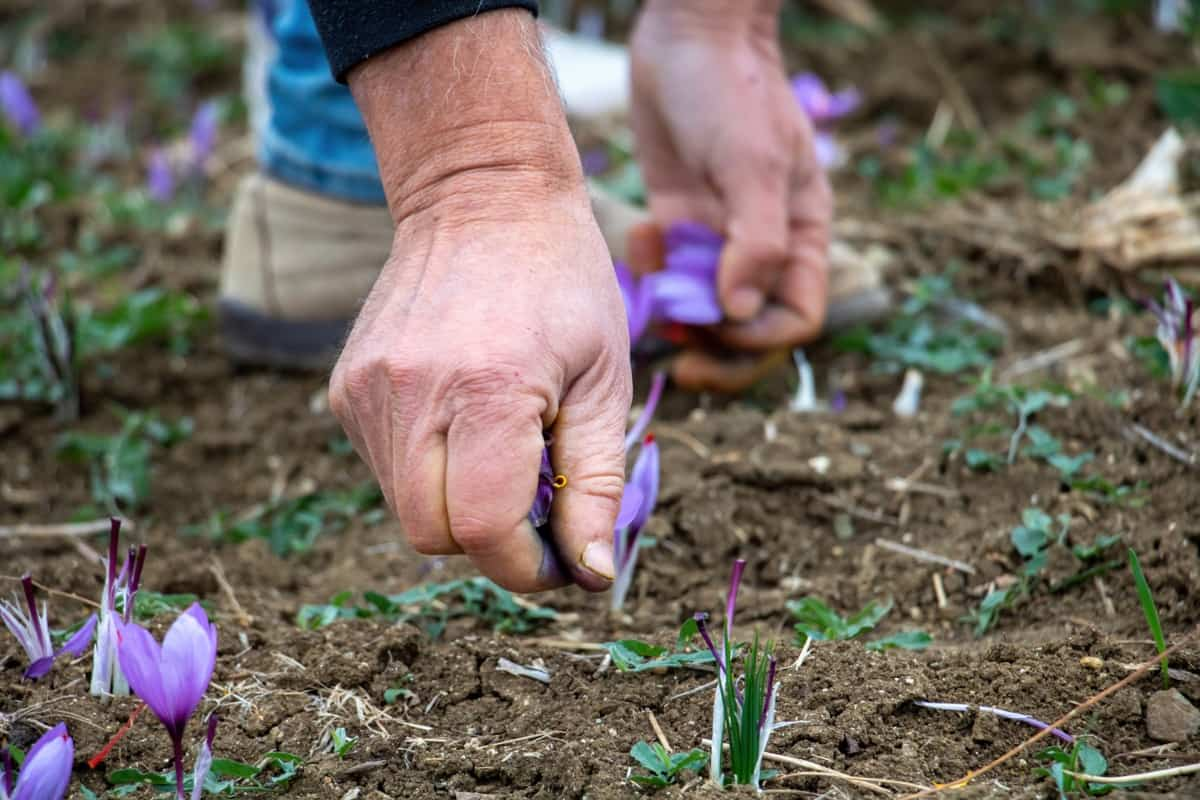
6-8 weeks after planting the corms, the plants are ready for harvest. It is believed that each corm produces 1 flower with 3 stigmas. The flowers should be picked when they open completely. Harvesting should be done during the mid-day of a bright sunny day. Manual picking is the most common way of harvesting these flowers. All the flowers are collected and piled on a table, and then the stigma is removed from the flowers for further processing.
In case you missed it: How to Start Dairy Farming in Chandigarh: Business Plan, Breeds, Setup Cost, Profit, and Requirements
How Long Does Saffron Last?
Saffron threads have to be dried for storage. If these threads are kept in an airtight container at a consistent temperature and with no bright light, they can be stored indefinitely. Dried saffron is expected to have a shelf life of 3 years, but ground saffron lasts only about 3-6 months.
Can We Grow Saffron at Home?
Yes, when provided with the right conditions for growth, it is possible to grow saffron at home. Getting the bulbs for planting is easy but may cost a little higher. When growing saffron at home in a small garden area, the bulbs should be planted to a depth of 3 to 5 inches with a minimum spacing of 6 inches.
What is the Best Time to Plant Saffron Bulbs?
In India, corms are planted in June-July or August-September to start flowering in October.
What Bulb Size Should be Used for Planting, and What Does the Size of the Bulb Indicate?
The size of the bulb indicates the circumference of the bulb, such as the bulb size of 9/10 indicates the circumference of the bulb is between 9-10 cm. The size of the corm used as planting material for the production of saffron is 7-10 cm, whereas the size of the corm used for new corm production is 2-7 cm.
What Type of Soil is Good for Saffron Cultivation?
Saffron needs well-drained soil with good organic content. Soil with neutral clay content or silty soil is considered good for saffron farming. The pH level of the soil should be around 6 to 8. Too much clay is not needed by the plants and should be improved by adding soil, peat or compost.
How Much Water is Required by Saffron Plants and How Often Should they be Watered?
Extreme wet soil is not needed for saffron plants. Under irrigated conditions, the plants need 7 lakh liters/hectare distributed over 10 irrigation cycles. Sprinkler irrigation is the most commonly used method for saffron farms.
In case you missed it: How to Start Greenhouse Farming in Nagaland: Crops, 1 Acre Greenhouse Cost, Subsidy, and Loans
What is the Life Span of the Saffron Crop?
The entire life cycle of the saffron plants can be classified into 5 major stages such as sprouting, flowering, leaf development, development of daughter corms, and dormancy. From planting to flowering, it takes 30-40 days and continues to flower for 5 or 6 weeks. The leaves of the plant remain green even after the flowering has stopped for about 6 to 8 months, during which the new daughter corms are produced. After this, the plant slowly turns yellow and dries out. Therefore, approximately the life span of the plant is about one year.
What is the Plant Spacing Between Saffron Plants?
The corms or bulbs of the plant are planted at a distance of 25 x 15 cm with 2 corms per hill such that one Hectare of land can accommodate 5 lakh corms. The spacing between rows in the farm should be around 20 x 10 cm.
How Does One Plant Saffron Bulbs?
- Find a location to receive adequate sunlight in the farm area and prepare the soil.
- Choose healthy disease-free bulbs from previous saffron plants.
- Plant the bulbs or corms into holes at a depth of 3-4 inches and spaced at 2-3 inches apart.
- Soak the soil lightly after planting.
- When flowering starts, it is considered as the harvesting period.
- After the blooming season is over, leave the foliage in the farm and keep maintaining them.
- If in case, the leaves turn yellow, then the foliage has to be removed.
What are the Diseases of the Saffron Plant, and How Can They be Controlled?
The most common diseases in saffron plants are Fusarium wilt, violet root rot, and Rhizoctonia crocorum. Spraying copper-based sprays that are anti-fungal in nature can be used for treating plants.
Why is Saffron so Expensive?
The high price of saffron is often related to its delicate and manual harvesting, which is both labor-intensive and risky. The stigma is so light can fall off the flower while harvesting, so extreme care is required while harvesting and processing the produce. Also, the smell, flavor and other positive attributes make saffron expensive.
In case you missed it: Digital Agriculture in India: Challenges and Opportunities
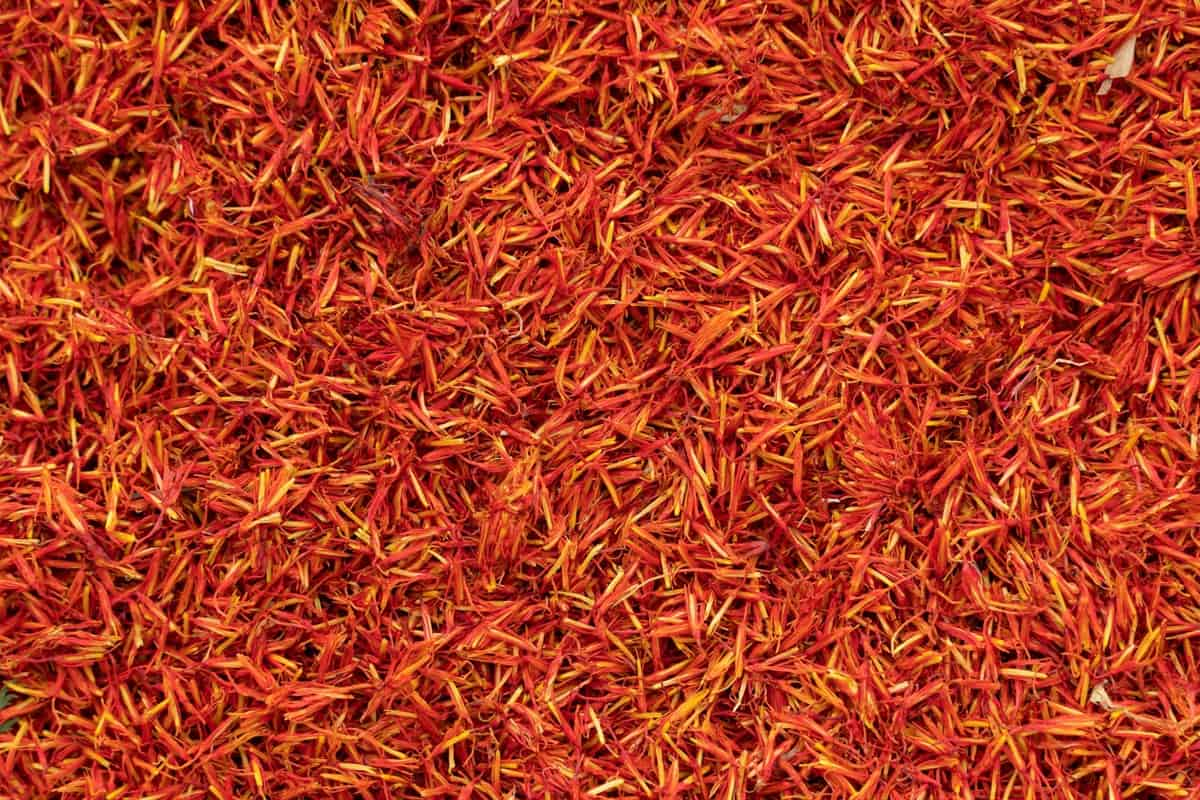
What Part of the Plant Does Saffron Grow?
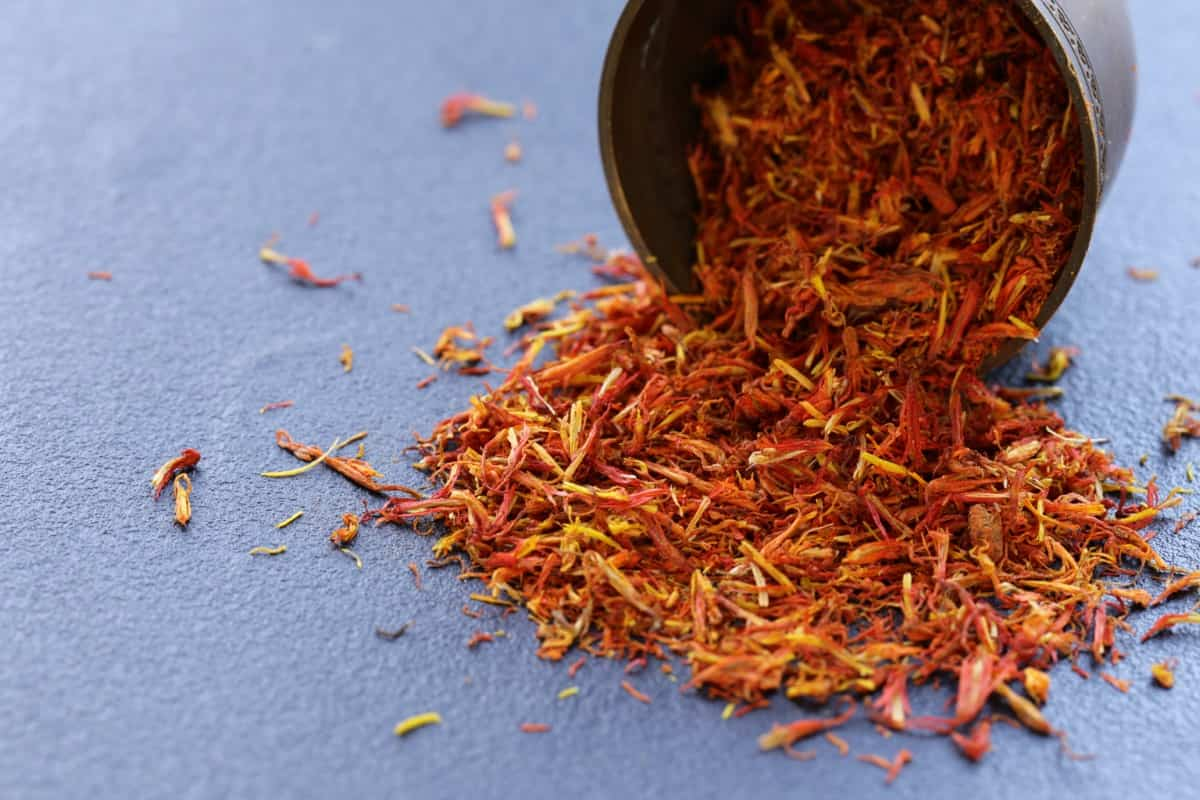
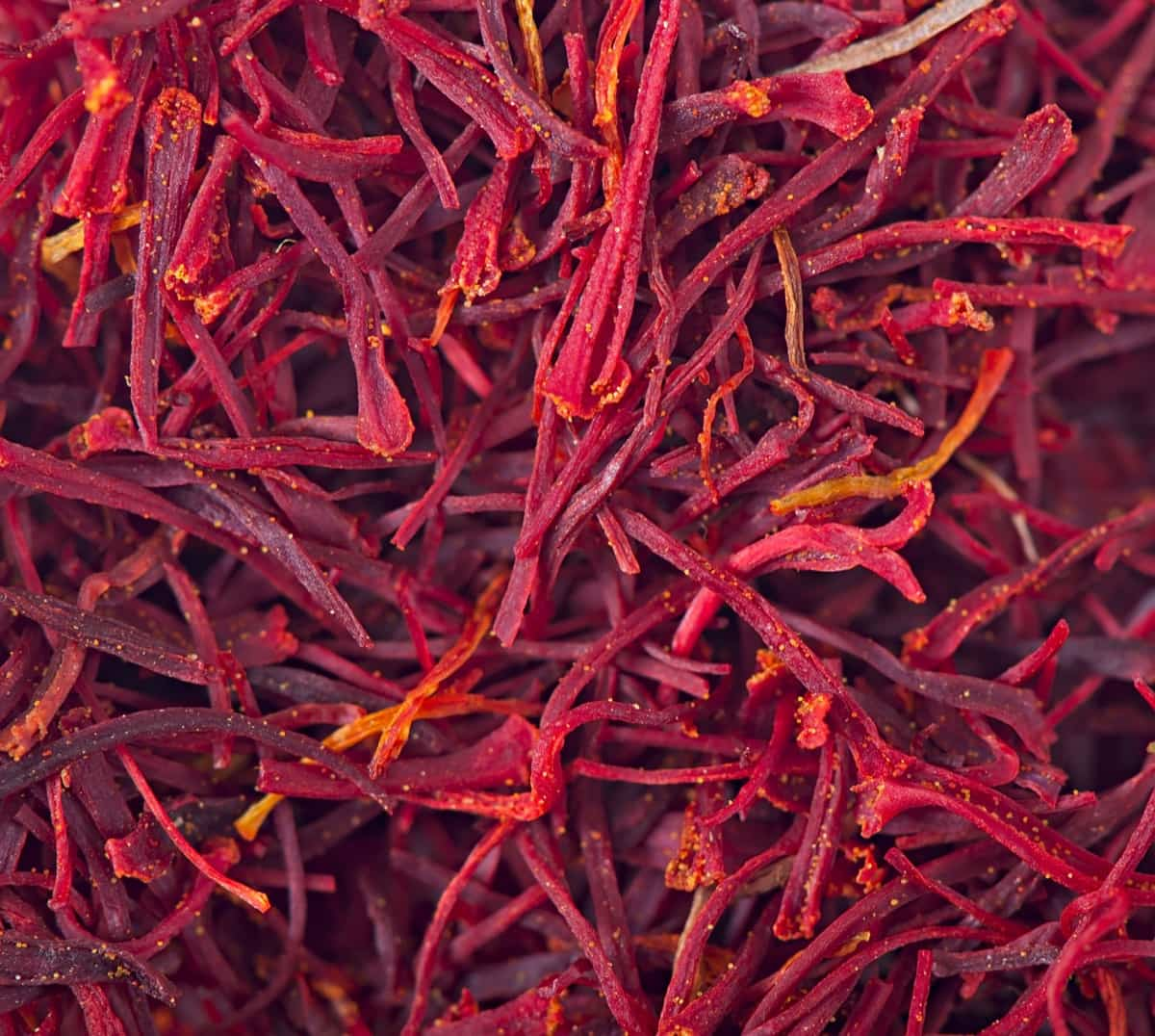
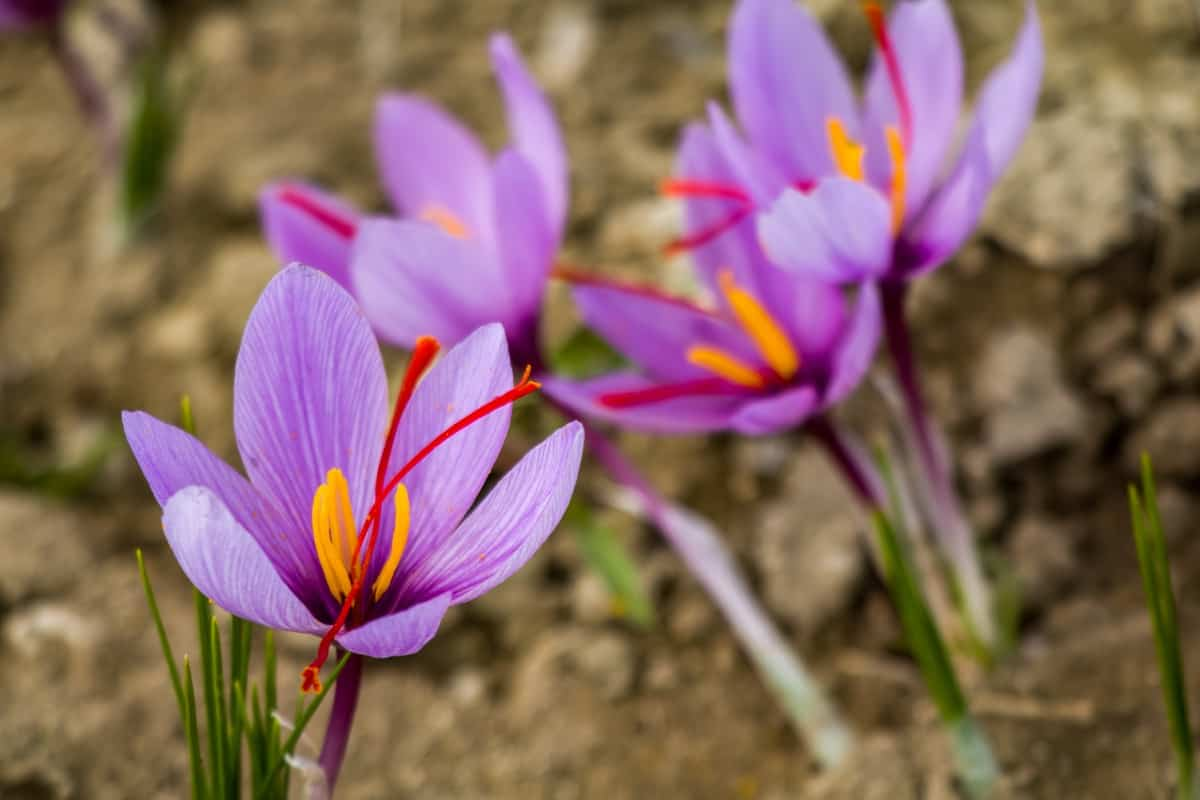
Saffron is part of the flower; the stigma and style produced in the flower are bright red in color and are generally referred to as saffron after being dried sufficiently. They are thread-like structures that are used for seasoning and coloring. Each flower is expected to have three stigmas or thread-like structures. This is the only commercially useful part of the entire plant.
What are the Saffron Varieties Cultivated in India?
There are three different varieties of saffron exclusively cultivated in India (Kashmir), they are Aquilla saffron (short variety, less red in color, less costly), crème saffron (the cheapest variety with high floral wastage), and Lacha saffron (dark crimson red in color, most expensive, exclusive to Kashmir).
What can be Done to Help Saffron Plants Flower Well Around the Year?
- Corms should be planted to a depth of 10-15 cm.
- The planting should be done using mature corms.
- Never trim the leaves of the plant.
- Add rich potash feed like a liquid tomato or Rose feed at the end of the flowering season to boost up the flowering in March.
- Grow the plants in a warm climate, if enough warmth is not available then cover the beds with cloches to keep it warm and nice.
What is the Drying Process of Saffron?
The traditional way of drying saffron involves shade drying for about 27-53 hours, but this way of drying is expected to degrade the crocin content in the saffron. So a better way of drying saffron is to use hot air dryers at a temperature of 40-50˚C for about 4 to 7 hours.
How Much Fertilizer is Required by the Saffron Farms?
The fertilizer management schedule used for saffron farming is NPK @ 90 kg, 60 kg and 50 kg per hectare, respectively. The farm should also be supplied with FYM @ 10 tonnes per hectare and vermicompost @ 25 kg per hectare.
In case you missed it: Yelakki Banana Farming in India: Production and Cultivation Management Practices
How Fertilizer Should be Applied to the Saffron Plants?
The inorganic fertilizers should be applied as a band around the plants. Initially, half the quantities of nitrogen, phosphorous, potassium, vermicompost, and FYM are applied as basal dose after 2nd hoeing for the first crop. Another half dose of nitrogen fertilizer is applied after the onset of flowering.
What is Corm Rot and How is it Treated?
There are many reasons for low corm production, but one of the main reasons for stabilized saffron production is corm rot complex caused because of many soilborne pathogens like Fusarium oxysporum, Rhizoctonia crocorum, etc. the disease is identified by the yellowing of leaves, wilting, round spots on the corm, leaf drooping and converting corm into black powdery mass. The disease of corm rot can be managed with chemical fungicides like carbendazim or mancozeb etc. Soil solarisation and other biological methods are also used for treating the soil and corms before planting.
- Goat Farming Training Programs in India: A Beginner’s Guide
- Types of Pesticides Used in Agriculture: A Beginner’s Guide
- Economical Aquaculture: A Guide to Low-Budget Fish Farming
- 15 Common Planting Errors That Can Doom Your Fruit Trees
- How to Make Houseplants Bushy: Effective Tips and Ideas
- Innovative Strategies for Boosting Coconut Pollination and Yield
- Pollination Strategies for Maximum Pumpkin Yield
- The Complete Guide to Chicken Fattening: Strategies for Maximum Growth
- Natural Solutions for Tulip Problems: 100% Effective Remedies for Leaf and Bulb-Related Issues
- Revolutionizing Citrus Preservation: Towards a Healthier, Greener Future
- Natural Solutions for Peony Leaf and Flower Problems: 100% Effective Remedies
- Maximizing Profits with Avocado Contract Farming in India: A Comprehensive Guide
- Natural Solutions for Hydrangea Problems: 100% Effective Remedies for Leaf and Flowers
- The Ultimate Guide to Choosing the Perfect Foliage Friend: Bringing Life Indoors
- From Sunlight to Sustainability: 15 Ways to Use Solar Technology in Agriculture
- The Ultimate Guide to Dong Tao Chicken: Exploring from History to Raising
- The Eco-Friendly Makeover: How to Convert Your Unused Swimming Pool into a Fish Pond
- Mastering the Art of Delaware Chicken Farming: Essentials for Healthy Backyard Flocks
- 20 Best Homemade Fertilizers for Money Plant: DIY Recipes and Application Methods
- How to Craft a Comprehensive Free-Range Chicken Farming Business Plan
- Brighten Your Flock: Raising Easter Egger Chickens for Beauty and Bounty
- How to Optimize Your Poultry Egg Farm Business Plan with These Strategies
- Subsidy for Spirulina Cultivation: How Indian Government Schemes Encouraging Spirulina Farmers
- Ultimate Guide to Raising Dominique Chickens: Breeding, Feeding, Egg-Production, and Care
- Mastering the Art of Raising Jersey Giant Chickens: Care, Feeding, and More
- Ultimate Guide to Raising Legbar Chickens: Breeding, Farming Practices, Diet, Egg-Production
- How to Raise Welsummer Chickens: A Comprehensive Guide for Beginners
- How to Protect Indoor Plants in Winter: A Comprehensive Guide
- Ultimate Guide to Grow Bag Gardening: Tips, Tricks, and Planting Ideas for Urban Gardeners
- Guide to Lotus Cultivation: How to Propagate, Plant, Grow, Care, Cost, and Profit
- Agriculture Drone Subsidy Scheme: Government Kisan Subsidy, License, and How to Apply Online
- Ultimate Guide to Raising Araucana Chickens: Breed Profile, Farming Economics, Diet, and Care
- Bringing Hydroponics to Classroom: Importance, Benefits of Learning for School Students
- Ultimate Guide to Raising Polish Chickens: Breed Profile, Farming Economics, Diet, and Care
- Ultimate Guide to Raising Australorp Chickens: Profile, Farming Economics, Egg Production, Diet, and Care
- Silkie Chicken Farming: Raising Practices, Varieties, Egg Production, Diet, and Care
I want to do farming of Kashmir saffron so pls. Suggest me
Can I grow saffron in Assam?
Hello Jagdish Sir…
Can we grow saffron Hydroponically?